Boilies are one of the most effective baits for carp, grass carp, and other large fish. But walk into any tackle shop or browse an online store and you’re immediately hit with hundreds of options — different sizes, flavours, compositions, floating or sinking. Where do you even start? This guide cuts through the noise and gives you clear, practical advice for picking the right boilies for your next session.
What Are Boilies and Why Do They Work So Well
A boilie is a round bait made from a blend of flour, eggs, protein, and flavouring additives that’s been boiled or baked until firm. That hard outer skin is the whole point — it won’t break down in water for hours, it stays on the rig, and it ignores the small nuisance fish that would destroy a softer bait in minutes.
That’s exactly why boilies became the go-to bait in carp fishing:
- a strong, persistent scent trail that draws fish from distance;
- firm texture that filters out roach, bream, and small carp;
- perfect shape for hair rigs — the most natural presentation possible;
- long shelf life without sacrificing effectiveness.
Types of Boilies: What’s the Difference
By Production Method
Boiled (standard) — the classic. Rolled paste balls are boiled for a few minutes to form a tough skin. They store well, hold up in warm water, and are suitable for virtually any situation.
Pasteurised — heat-treated but not boiled. They retain more flavour than standard boilies while still having decent durability.
Shelf-life — made with preservatives or through drying. Storable at room temperature for up to a year. Great for anglers who fish occasionally or want a ready supply on the shelf without worrying about freezer space.
Freezer baits — widely considered the gold standard by experienced carp anglers. No preservatives, maximum flavour release, and a natural ingredient profile. The downside: they need to be kept frozen. If you’re serious about carp fishing, start here.
By Composition
High-protein — based on fishmeal, casein, or soya protein. Rich nutritional profile that pulls in large, selective fish. Works best in warm water (above 15°C) when carp are feeding aggressively.
Fruit and berry — strawberry, banana, pineapple, peach. Sweet, appealing scents that travel well in warm water. Often effective on pressured waters where fish have wised up to fishmeal baits.
Nut and seed — tiger nut, hemp, corn, spelt. Natural flavours the carp already associate with food. Reliable year-round, especially on lakes with heavy fishing pressure.
Spice — pepper, garlic, curry, chilli. Sharp, penetrating scents that diffuse well even in cold water. The go-to choice for early spring and autumn sessions.
What Size Boilies Should You Use
Size comes down to the target fish and how much small fish pressure you’re dealing with.
| Diameter | Best For |
| 10–12 mm | Smaller or cautious carp, heavily fished waters |
| 15–16 mm | All-round size for most conditions and fish from 3 kg+ |
| 20 mm | Larger carp from 7–10 kg, naturally filters out small fish |
| 24 mm+ | Trophy fishing, large reservoirs and gravel pits |
Quick tip: fishing a new water and unsure what’s in it? Go with 16 mm. It’s the most versatile size across the widest range of scenarios.
Choosing Flavour and Colour
Flavour — Match the Season and Water Temperature
- Spring and autumn (water below 12°C) — spicy, garlic, or fishmeal flavours. In cold water, scent molecules diffuse slowly, so you need something bold and punchy.
- Summer (water above 18°C) — fruit, nut, or dairy flavours. Natural, sweeter scents travel well in warm conditions without needing to be overpowering.
- Winter — fish are barely feeding. Drop down to a smaller size (10–12 mm) and use a mild or neutral flavour. Less effort for the fish means a better chance of a take.
Colour — Match the Water Clarity
In murky or stained water, bright colours (yellow, orange, white) stand out and help fish locate the bait. In clear water, natural tones (brown, beige, olive) look less suspicious and spook fewer fish.
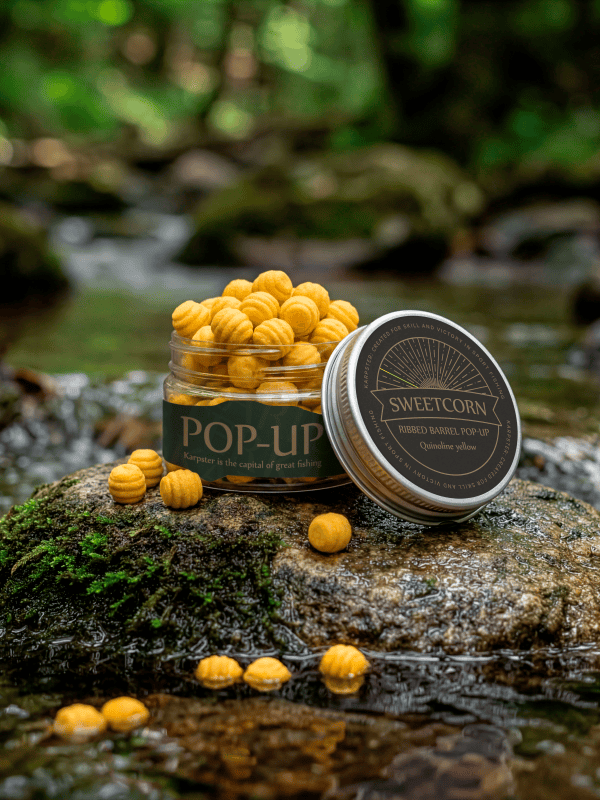
Pop-up boilies are typically made in bright colours for exactly this reason — visibility over the bottom matters.
Sinking, Pop-Up, or Wafter: Which Buoyancy to Choose
Sinking boilies — standard bottom bait, lies flat on the lakebed. Works perfectly on hard, sandy, or gravel bottoms.
Pop-ups — incorporate air or lightweight materials to hover above the bottom at a set height. Use them when:
- the bottom is silty and a standard bait disappears into it;
- fish are feeding just off the bottom or mid-water;
- you need a highly visible, standout presentation.
Wafters — neutral or near-neutral buoyancy. They rest on the bottom but rise easily with the slightest water movement or hook pull. Often considered the most deceptive option — the fish picks it up naturally, with no extra resistance.
How to Get the Most from Your Boilies
- Baiting up is non-negotiable. A single boilie on a hook with no free offerings around it is a lottery. Pre-bait your spot with the same boilies you’ll use as hookbait, ideally 1–2 days before your session. Carp learn to associate a spot with food and return to it.
- Use a hair rig. Never thread a boilie directly onto the hook — that’s a beginner mistake that costs bites. With a hair rig, the boilie hangs on a short length of braid next to the hook. The presentation is natural, and the fish doesn’t feel the hook until it’s too late.
- Store correctly. Freezer baits go in the freezer — always. Shelf-life boilies keep at room temperature in a sealed bag for up to 12 months. Once open, use within 1–2 months for best results.
- Dips and glugs. Liquid attractants soak into the boilie and dramatically increase the scent cloud around your rig. Especially effective in cold water when natural diffusion slows down, or at the start of the season when fish are waking up.
Common Mistakes When Choosing Boilies
Buying the most expensive option and expecting miracles. A premium boilie used in the wrong season, on the wrong water, or with the wrong approach will underperform a mid-range bait used correctly. Price isn’t everything.
Fishing without free offerings. One hookbait in an empty swim is hope, not a strategy. Consistent results come from a regularly baited spot.
Changing flavours every week. Carp learn to eat what’s repeatedly available. If you keep switching, you’ll never build a feeding response. Give any flavour at least two or three sessions before writing it off.
Getting the size wrong. Fishing a 24 mm boilie on a water full of 1–2 kg carp will rarely produce. Match your hookbait size to the actual fish you’re targeting.
Final Word
Choosing the right boilies isn’t about guesswork — it’s about matching the right bait to the right conditions. Season, water temperature, target fish size, bottom type. Start with a proven, classic flavour, bait up consistently, dial in your size, and the results will follow.
Browse our boilie range and find the right option for your water and your season.